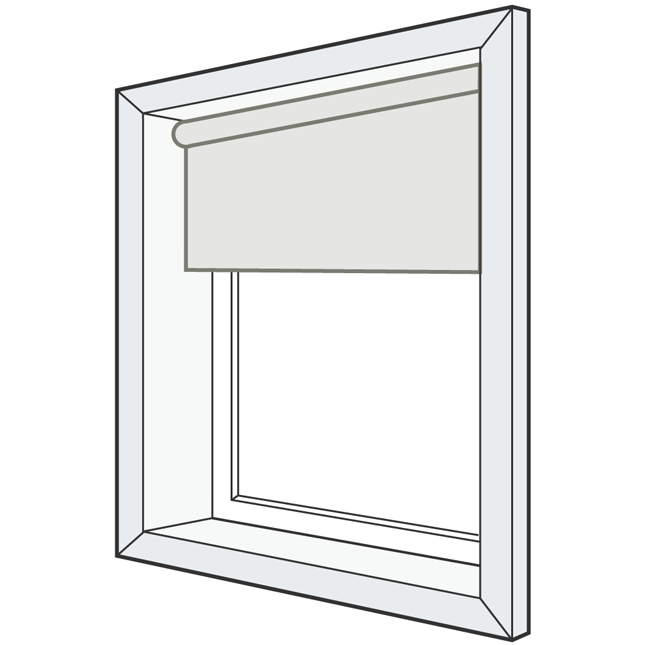
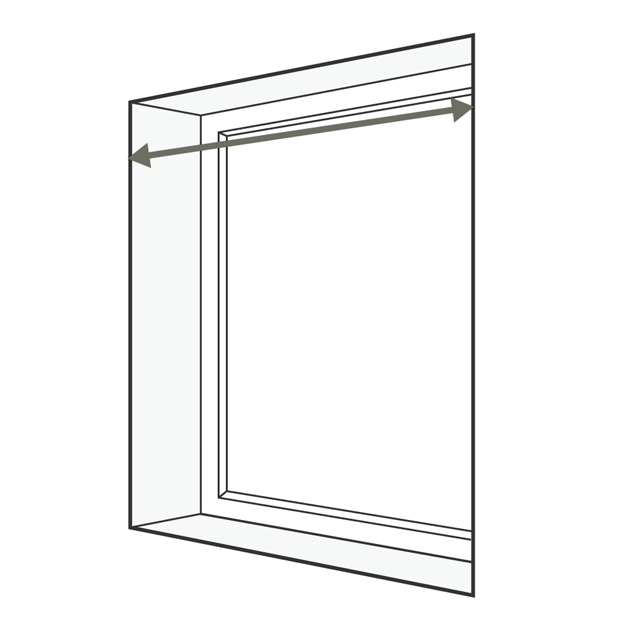
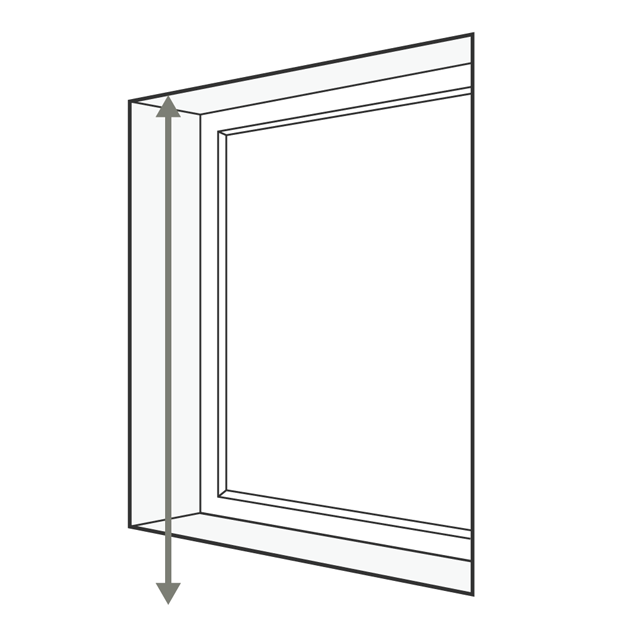
Exterior Mounting (Outside the window frame)
These blinds are mounted outside the window frame, attached to the frame and facing inward. This installation style is ideal for bedrooms, providing exceptional light-blocking capabilities to reduce incoming light. Back-rolling blinds are recommended for this setup. Additionally, a bracket cover can be used to achieve a tidy and sophisticated appearance.
Interior Mounting (Inside the window frame)
These blinds are installed within the window frame and firmly secured to the frame itself. This setup is perfect for living areas, particularly when choosing light-filtering or sheer blinds that allow natural light to enter. When deciding between front or back roll blinds, it's essential to consider any obstructions or protrusions. This mounting method offers a contemporary and polished appearance.
Need measurements for a frameless window? No worries, we've got you covered!
Once you've chosen your design, it's time to begin measuring!
Measure your custom blind for precise sizing.
It's a straightforward process, but we require a few details:
- The width measurements.
- The drop measurements.
- The depth of the window frame for blinds installed inside the recess.
- Select the desired side for chain placement.
- Measure the chain drop or control height.
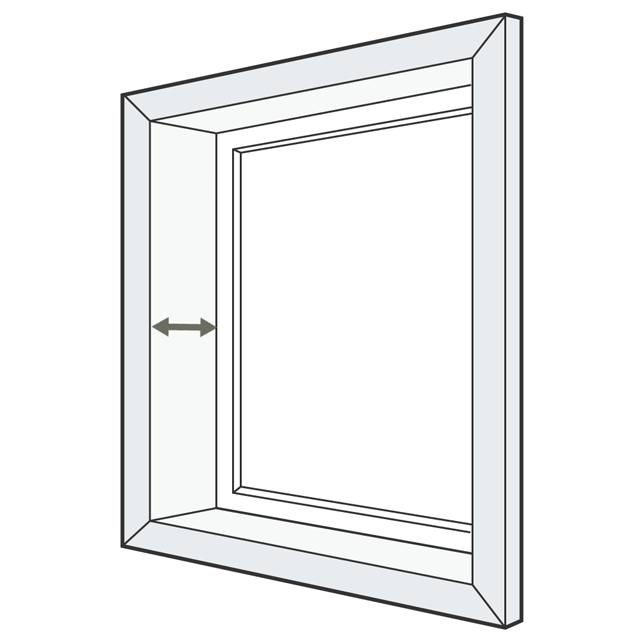
Measure the window depth.
For a blind installed inside the window frame, make sure there's a minimum 2-inch clearance between the window glass and the frame's edge. Consider this when determining the window depth.
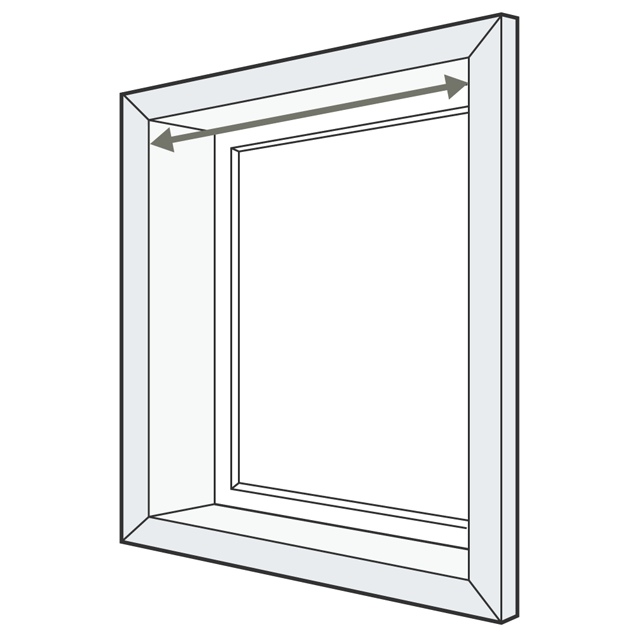
Measure the window's width.
Remember to record your measurements as you proceed.
For a blind installed inside the window frame, measure the width at the top interior section of the frame.
For a blind installed inside the window frame, make sure there's a minimum 2-inch space between the window glass and the frame's edge. Take this into consideration when measuring the window depth.
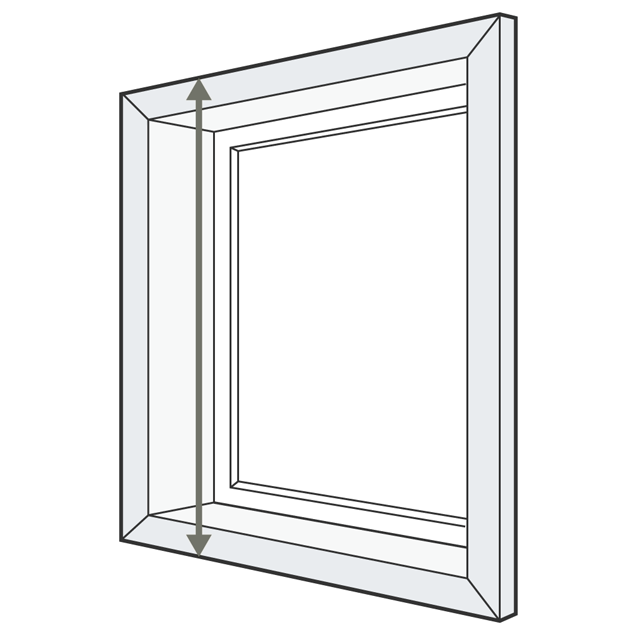
Measure the window's height.
For an outside casing blind, measure from the top of the window frame to your preferred endpoint for the blind. The height can vary depending on whether you want the blind to reach the window sill, be positioned above the floor, or align with other blinds in the room. The choice is yours!
For an inside casing blind, measure the precise dimensions within the window frame.
Select the preferred position for the chain placement.
Where would you like the chain to be located on the window? Please take into account the layout of the room and the ease of accessing the chain.
To determine the minimum chain drop, you can use our provided formula. The minimum chain drop is calculated as follows: (Drop ÷ 2) + 8 inches.
To calculate the minimum chain drop, divide the blind drop by 2, then add 8 inches. Round the result up to the nearest chain size.
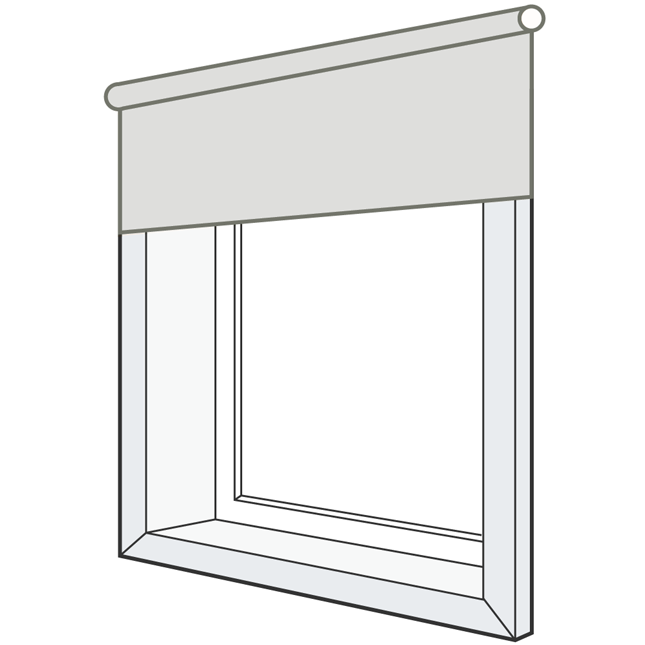
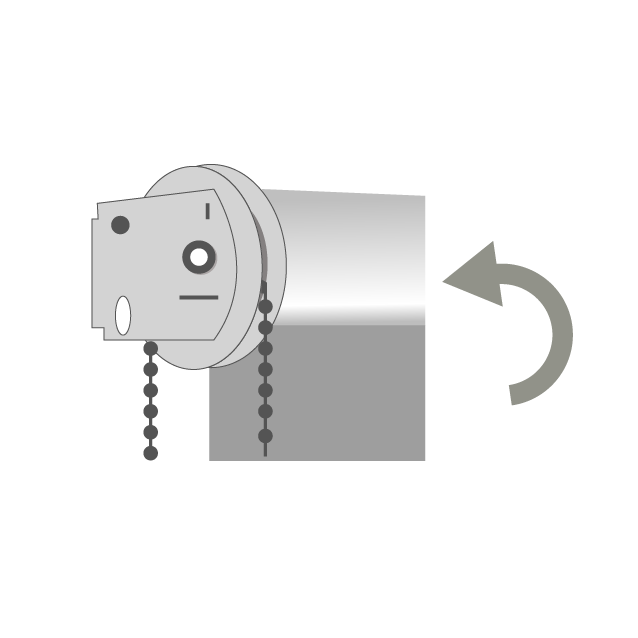
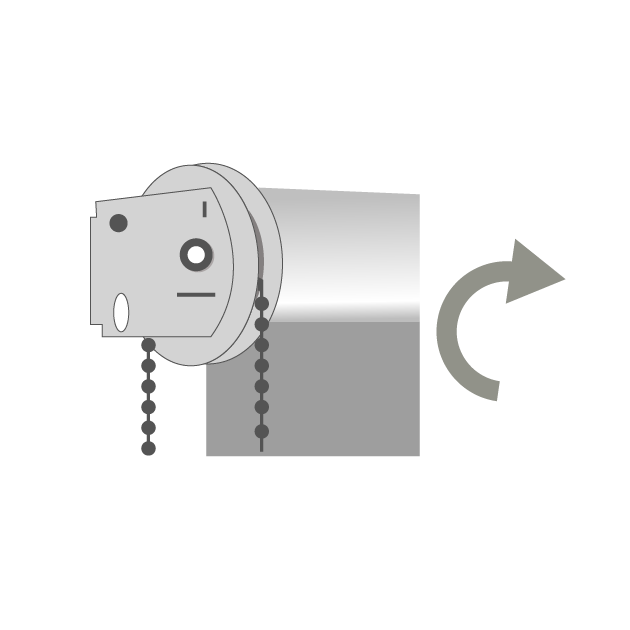
Take into account the rolling direction of your blind.
Which direction would you like your blind to roll?
Blinds with back rolling feature
- Blinds with back rolling ensure convenient chain access, situated at the front of the fabric for effortless operation.
- Back rolling minimizes light gaps in exterior casing windows by placing the rollers near the frame.
- Back rolling blinds perfectly fit the recessed window frame, assisting in insulation.
Blinds with front rolling mechanism
- Front-roll blinds hide both the blind roll and the white backing fabric.
- Front-roll blinds are perfect for inside casing windows, ensuring no obstructions inside the frame, like window winders or bars, interfere with the blind.
Additional considerations to explore
Think about whether you'd like to opt for a motorized roller blind. This choice can enhance both the appearance and performance of your blinds.
I need to measure my frameless window.
Adjacent to a frameless window (surface-mounted)
The blinds are installed outside the window frame and firmly attached to the wall. They effectively block a significant amount of incoming light. Using back-rolling blinds is advisable. A bracket cover can be used for a tidy and polished appearance.
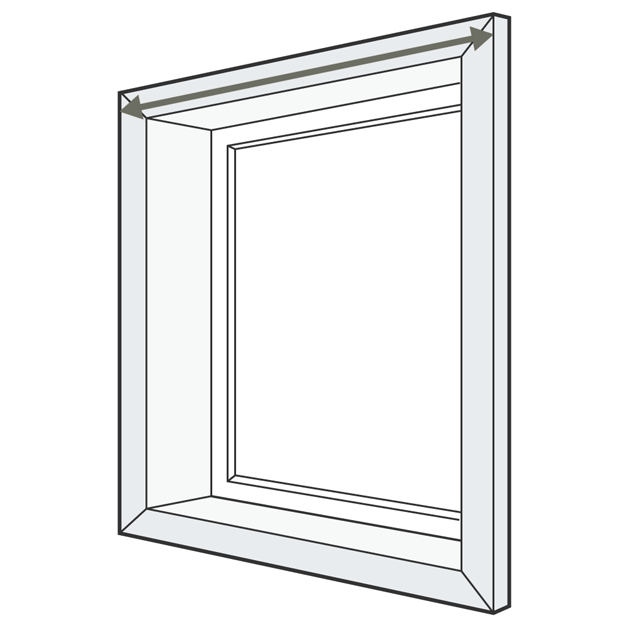
Measure the window's width.
Ensure to measure the full width of the window frame from one end to the other on the exterior side. Remember to add at least an extra 2 inches in width for a frameless window (outside casing installation).
Measure the window's height.
Measure from the top of the window frame to your chosen endpoint for the blind's frame. The height measurement can differ based on whether you prefer the blind to reach the window sill, be positioned above the floor, or match with other window blinds in the room. The decision is yours!
To cater to a frameless window (outside casing), add an additional 3 inches to the height measurement.
Here are our helpful guidelines for measuring your custom blinds:
Ensure precision by using centimeters (cm) for measurements. Use a steel measuring tape to ensure meticulous accuracy.
Provide only the specific details requested, ensuring accuracy in your order.
Begin by recording the width measurement to maintain proper sequence.
Measure each window individually rather than assuming uniformity.
Avoid relying solely on house plans for measurements.
When measuring multiple windows in a house, assign numbers to each and proceed clockwise to prevent confusion.
Feel free to reach out to us if you encounter any challenges; we're here to assist you at every step.